AHGadget
Multi-protocol wireless exploration and power-monitoring platform.
Overview
AHGadget is a handheld multi‑protocol wireless exploration device that brings IR, RF, BLE, Wi‑Fi, and power‑monitoring tools into a single platform. The prototype implements all major subsystems and workflows, but it has not yet been built into a final enclosure or PCB.
Architecture
The system uses a dual‑processor design. A Raspberry Pi Zero 2 W handles the UI, scanning, and high‑level logic. An ESP32‑S3 manages timing‑critical IR and RF operations, BLE advertisement parsing, and power telemetry. Both processors communicate through a structured IPC channel.
Communication Architecture
Interaction between the Pi Zero 2 W, ESP32‑S3, CC1101, INA219, IR subsystem, and Wi‑Fi adapter through the IPC channel.
Hardware Design
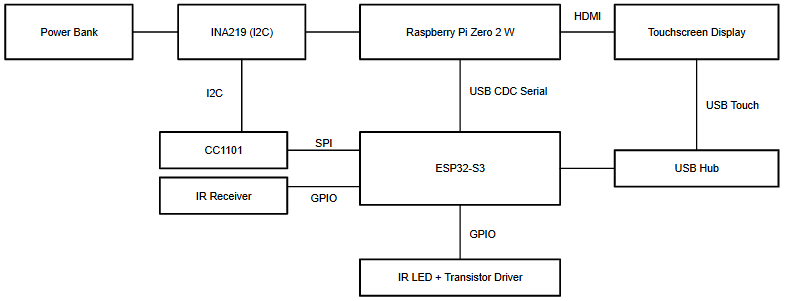
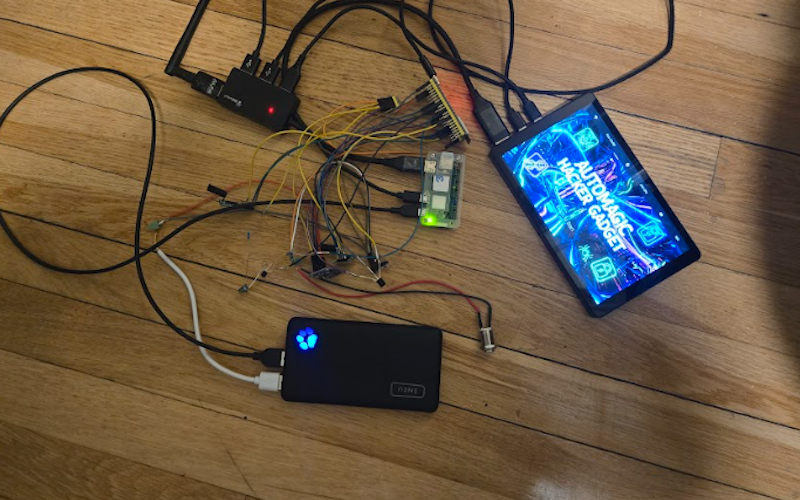
AHGadget integrates multiple wireless modules into a single working prototype. The hardware stack includes the touchscreen, Pi Zero 2 W, ESP32‑S3, CC1101 RF module, INA219 power monitor, IR subsystem, and external Wi‑Fi adapter. A proper PCB and enclosure are planned for a future version.
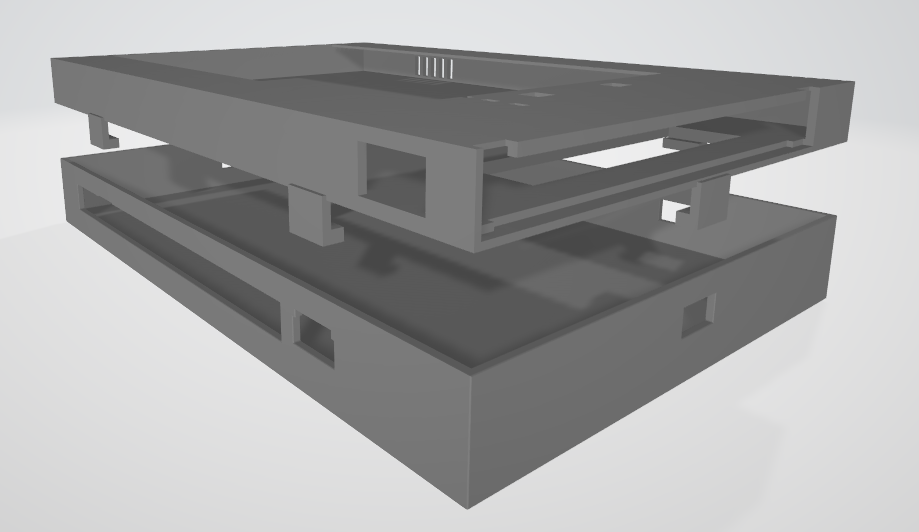
Enclosure Design
Initial layout for the touchscreen, Pi, ESP32‑S3, RF module, and power system.
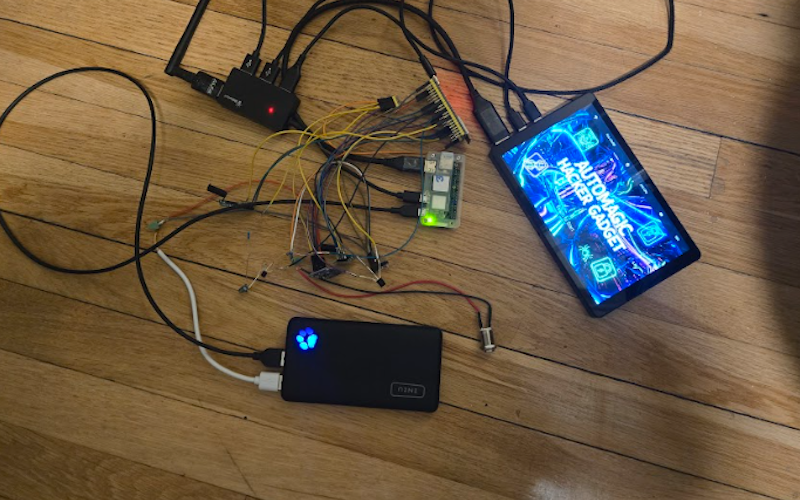
Hardware Stack
Assembled prototype showing module placement and interconnects.
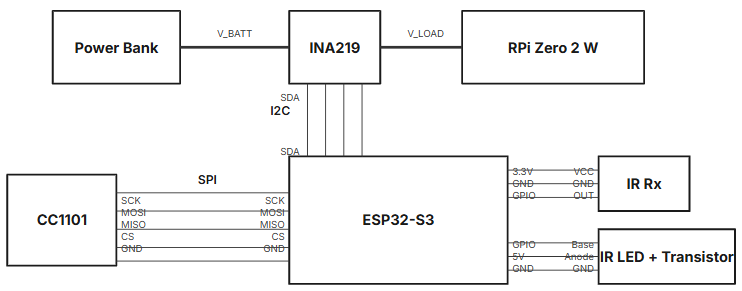
Wiring Diagram
Electrical wiring and power routing across all subsystems.
Software Architecture
The software includes a Python/Kivy UI on the Pi, custom ESP‑IDF firmware on the ESP32‑S3, and an IPC channel for JSON commands, subsystem events, and binary RF frames.
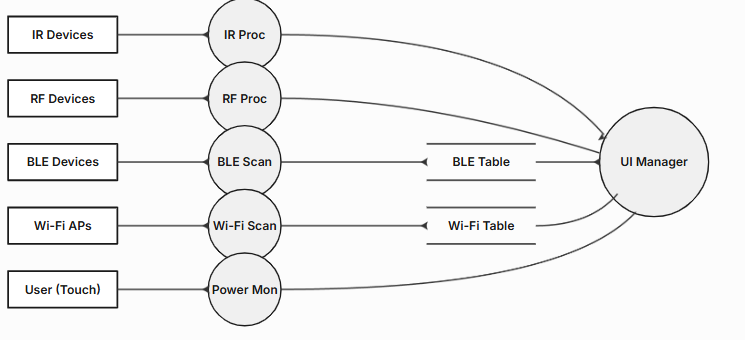
Data Flow Diagram
Data pathways between the UI, IPC channel, and sensor hardware.
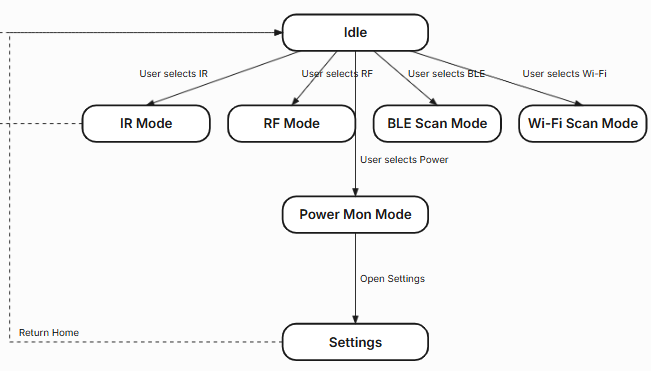
System State Machine
Transitions between idle, scan, capture, replay, and power‑monitor states.